About Us
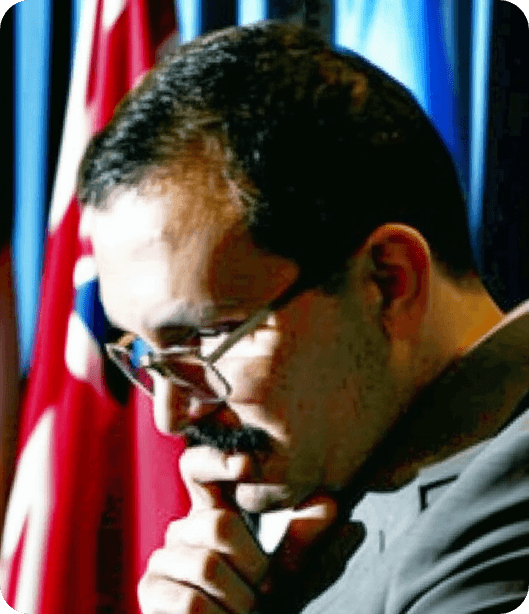
About Dr. Shahram Azam
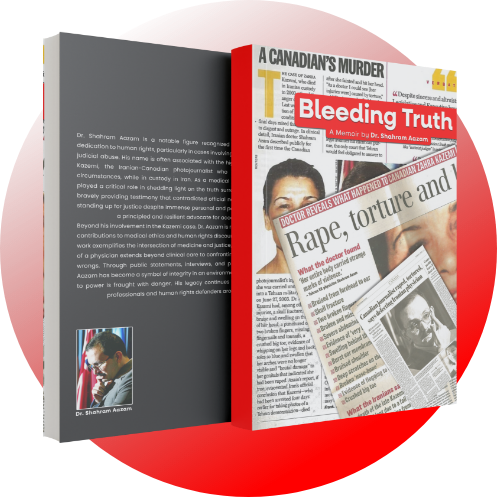
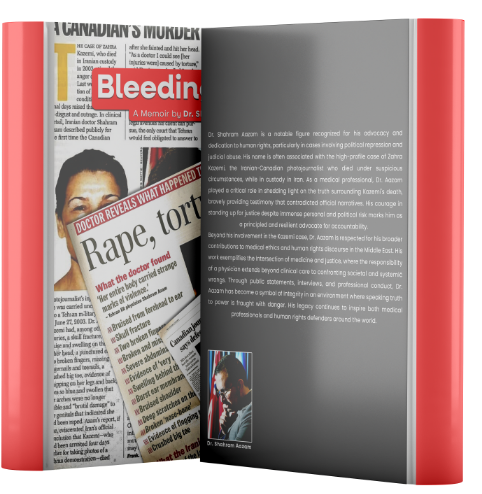
Dr. Shahram Azam, MD, PhD, is the author of the pioneering Bleeding Truth memoir. This unique and brave first-person account reveals the brutal truth behind Iran’s most secretive institutions. His memoir, now familiar throughout the world as the Dr. Shahram Azam memoir, is based on one moment of truth that would change everything, the evening he treated journalist Zahra Kazemi in Baghiatollah Hospital.
It was the start of a terrifying Zahra Kazemi torture eyewitness testimony, in which Dr. Azam recognized evidence of brutal beating, rape, and deadly brain damage, wounds sustained while she was in imprisonment at Tehran’s infamous Evin Prison.
Working under military command, Doctor Azam risked his career and life to save as much evidence as possible. His escape from Iran with hidden documents transformed his testimony into a crucial whistleblower memoir that Iran tried to silence.
Having come to Canada, his story goes on in the form of a human rights memoir, Canada exile, reporting the price of truth and the personal sacrifice for every act of defiance. A survivor of censorship and intimidation, Dr. Azam’s story is a unique medical doctor’s political testimony from Iran, from the ER floor to the Parliament.
It is more than a memoir, but also a contribution to Zahra Kazemi’s biography and the global struggle for justice. His book stands tall among the most compelling works in the Iran human rights memoir 2025 category, a record that will not let silence prevail.
In headlines and history, his story shares under one unbreakable banner:
“Bleeding Truth” Shahram Azam, eyewitness of Zahra Kazemi’s torture and murder.
As interest stands globally, particularly for books such as the Dr Shahram Azam Evin Prison whistleblower memoir, this title remains the focal point of discussion for censorship, medical ethics, and justice.
The memoir’s publication arrives at a critical moment, as interest grows in the Bleeding Truth 2025 memoir human rights barrel, making it a must-read for advocates, journalists, and everyday readers alike.
Witness to Repression & State Violence
As a physician in the military in Tehran, Dr. Shahram Azam was working within a healthcare system geared to supporting the state, not its citizens. Those who were considered “enemies of the regime”, student demonstrators, reporters, and political detainees, were frequently denied even minimal medical care or treated with aggression. Each day, he faced an ethical crisis. Would he comply with the state’s silent rules or uphold his professional oath?
He opted for the end. In clinical silence and under around-the-clock watch, he started secretly documenting patterns of injury and gathering depositions from abuse victims. These were not only medical charts; they were proof. The Zahra Kazemi torture eyewitness account stands as one of the most defining moments of his existence, when a brutally wounded journalist was rushed into his ER. That evening was the start of what would be the basis of Dr. Shahram Azam’s memoir, a whistleblower’s testament created not through theory, but through bloodied hands and hospital sheets.
Medical Ethics in a System of Fear
What distinguishes Dr. Shahram Azam from so many of his colleagues is not just what he saw, but what he did with it. In the face of threats from Iran’s military intelligence agencies, he refused to doctor reports or turn a blind eye to evidence of torture. His refusal made him the target of the regime, but to him, silence was complicity. The experience remains today a rare and principled instance of medical doctor political testimony in Iran, a testament that even under authoritarian regimes, professional conscience will not be defeated.
His words now resonate in global discourse on medical neutrality, especially when neutrality is used as a shield to defend power. Having worked within this wicked system for decades, Dr. Azam witnessed how physicians could be drafted into passive accomplices. His existence makes it explicit: silence before torture is not neutral, it’s criminal.
Forced Exile and Firm Advocacy
Eventually, Dr. Shahram Azam was given an ultimatum: stop documenting political injuries or face the consequences. Realizing the danger he and his family were in, he fled Iran under the cover of a medical visa, smuggling out Zahra Kazemi’s real hospital records. His escape and resettlement in Canada transformed his life into a powerful human rights memoir, Canada exile, where he could speak freely, treat patients without compromise, and expose the truth.
Even in exile, he was still deeply connected to the cause in Iran. As news of his actions grew, the backstory to the Dr Shahram Azam Evin Prison whistleblower memoir became more than personal; it became political. From Canada, he continued to be an advocate by attending public hearings, including testifying before the Canadian Parliament. His ongoing contributions cemented his name alongside those striving to further the cause of justice, dignity, and transparency in the Middle East and beyond.
A Mission Driven by Humanity
Despite the political fallout, Dr. Shahram Azam never lost sight of the human aspect of his work. Behind each case of abuse he observed stood a person with a history. His experience of those accounts, of the bravery of demonstrators, of the pain of parents, of the silent resistance of other healthcare workers, influenced not just his testimony but his own identity. Those real-life experiences are at the heart of the legacy of the Bleeding Truth memoir, which humanizes what political violence so consistently dehumanizes.
In drawing attention to faces and names of systemic abuse, his book also makes a valuable contribution to Zahra Kazemi’s biography, preventing her memory from being erased by propaganda or official amnesia. This dedication to memory puts his book firmly within the canon of Iranian human rights memoirs 2025.
Continuing the Fight from Abroad
Now settled in Ontario, Canada, Dr. Shahram Azam remains caught between his work as a practicing doctor and continued public activism. He addresses academic panels, human rights committees, and medical ethics symposia on a regular basis. His experience has been invoked throughout deliberations on whistleblowing, clinical impartiality, and post-authoritarian truth-speaking. The increasing awareness of his activities is summarized in such headlines as “Bleeding Truth,” Shahram Azam, the eyewitness of the Zahra Kazemi case, indicating the larger importance of his witnessing.
As scrutiny of systemic repression grows, particularly within the Iranian diaspora, his story towers above a new generation of activism and literature, such as the much-discussed Bleeding Truth 2025 human rights barrel memoir, which gathers international voices chronicling violence and resilience.
A Legacy of Truth and Conscience
Dr. Shahram Azam’s life is not marked by one moment, but by a series of acts of bravery: to record, to bear witness, to flee, and to continue to speak out. His value to the medical, political, and human rights communities is not only in what he wrote, but in what he endured. The Bleeding Truth memoir is just a fraction of his work; the rest goes on in every life he touches, every platform he steps onto, and every silence he breaks.
Get Discount up to 50% off Today!
For new customers, start subscribing for the first time
and get vouchers up to 50%
AWARDS WINNING
The Award I Received as a Writer
Delighted to share the honor of receiving an award for my work as a writer. Grateful for the recognition and excited to continue crafting stories that resonate with readers. Thank you for your support on this incredible journey!